
Refinable
Empowering Creators with Custom NFT Storefronts
Year
Nov 2021 – Dec 2022
Role
Product Designer
Tools
Figma
Adobe Photoshop
Adobe Illustrator

Project Overview
Most NFT marketplaces are built for trading.
But for creators, marketplaces rarely feel like home. Collections are displayed in standardized layouts, leaving little room for projects to build their own identity or create a space that truly represents their brand.
Refinable set out to change that.
Originally launched as an NFT marketplace on Binance Smart Chain, Refinable later expanded its platform to provide tools that empower creators to manage and showcase their NFT projects more independently.
One of those tools was Refinable Storefront — a feature within the Refinable Creator Suite that allows creators to build their own branded NFT storefronts without needing to write code.
The product consisted of two connected experiences:
-
A Creator Dashboard, where creators design and manage their storefront
-
A Public Storefront, where collectors explore projects, browse collections, and purchase NFTs
As the Product Designer, I was responsible for designing the storefront experience from end to end — from the creator dashboard where storefronts are built, to the public storefront where collectors interact with NFT collections.
Working closely with the product manager and engineering team, my focus was to create a system that gives creators meaningful control over how their projects are presented while still delivering a clear and intuitive browsing experience for collectors.
The Challenge

NFT marketplaces made it easy to mint and trade NFTs.
But they weren’t designed to help creators present their work or build a recognizable brand.
Most collections lived inside standardized marketplace layouts where every project looked largely the same. For creators trying to build communities around their projects, this lack of control made it difficult to stand out.
As the platform expanded beyond a traditional marketplace, the team at Refinable wanted to give creators more ownership over how their projects were presented.
The idea was simple: allow creators to build their own storefronts.
But designing this experience introduced several challenges.
Creators Needed Control — Without Complexity
Creators wanted a space that felt like their own.
They wanted to showcase collections, tell the story behind their projects, and present their NFTs in a way that matched their brand. However, most creators were not developers or designers, which meant the system needed to be flexible while remaining easy to use.
Giving creators too much freedom could quickly lead to complicated tools and poorly structured storefronts. Too little flexibility, on the other hand, would make every storefront feel identical.
The challenge was finding the right balance between customization and simplicity.
Collectors Still Needed a Clear Experience
While creators needed control over how their storefront looked, collectors still needed a clear and intuitive browsing experience.
Collectors visiting a storefront should be able to quickly:
-
understand what the project is about
-
explore available collections
-
view NFTs and purchase them
If every storefront behaved completely differently, the experience could easily become confusing.
This meant the storefront system had to maintain a level of structural consistency, even while allowing creators to customize their presentation.
Designing for Two Different Users
The product also had to serve two very different users.
Creators who design and manage their storefront through a dashboard.
Collectors who visit the public storefront to explore projects and purchase NFTs.
Each group had different goals and expectations. The design needed to support creators building their storefront while ensuring collectors could easily navigate and discover NFTs once the storefront was published.
Balancing these two experiences became a key consideration throughout the design process.

Design Goals

Designing the storefront experience meant balancing two very different needs: creators wanted the freedom to present their projects in their own way, while collectors still needed a clear and familiar browsing experience.
To guide the design, I defined a set of goals that would help shape how the storefront system should work. These goals helped ensure that design decisions stayed aligned with both creator needs and the overall platform experience.
Give Creators Meaningful Customization
Creators needed a way to present their projects in a way that felt unique and aligned with their brand.
However, the goal wasn’t to give creators unlimited design freedom. Too much flexibility could easily lead to complicated tools and inconsistent storefronts.
Instead, the design focused on structured customization — allowing creators to control key elements of their storefront while keeping the overall experience intuitive and manageable.
This approach would allow creators to personalize their storefront without requiring design or technical expertise.
Maintain a Clear Experience for Collectors
While storefronts needed to feel unique for creators, collectors still needed a familiar and easy-to-navigate browsing experience.
Collectors visiting a storefront should be able to quickly understand what the project is about, explore available collections, and browse NFTs without friction.
Maintaining a consistent structural foundation across storefronts would help ensure collectors could easily navigate different creator pages without needing to relearn the interface each time.
Build a Scalable Storefront System
The storefront feature also needed to function as a system that could support many different creators and collections across the platform.
Rather than designing a single fixed layout, the goal was to create a flexible structure that could support different types of content while maintaining visual consistency.
Designing the storefront as a scalable system would also allow the feature to grow over time as the platform expanded and new creator needs emerged.

Design Process
Designing the storefront experience required understanding how creators currently present their projects and how collectors explore NFT collections across different platforms.
This project was a close collaboration between product, design, and engineering. The Product Manager led the discovery phase, conducting interviews with creators to better understand how they currently showcase their NFT projects and what limitations they experience on existing marketplaces. I participated in several of these sessions and contributed to discussions around creator needs and potential product directions.
Alongside these discovery efforts, I explored the broader NFT ecosystem to understand how creators and collectors interact with NFT platforms today. This included reviewing different marketplaces, creator project pages, and independent NFT websites to identify patterns in how projects are presented and how collectors typically navigate and purchase NFTs.
Understanding How NFT Projects Present Themselves
Many NFT creators relied on external websites or landing pages to tell the story behind their projects. These spaces often included elements such as project descriptions, roadmaps, artwork previews, and links to marketplaces where collectors could purchase the NFTs.
In contrast, most marketplace listings focused primarily on the NFTs themselves, offering limited space for creators to present the broader context of their work.
This highlighted an opportunity: a storefront could act as a central hub for a project, allowing creators to introduce their brand, organize collections, and guide collectors through their work in a more structured way.
Mapping the Collector Journey
To better understand how collectors interact with NFT platforms, I mapped out the typical journey a collector goes through when discovering and purchasing an NFT.
This helped break down the experience into a series of stages — from discovering a project to browsing available NFTs and ultimately completing a purchase. Understanding this journey was important because the storefront experience needed to support several of these moments, particularly discovery, exploration, and evaluation.

Collector journey map illustrating the stages from NFT discovery to ownership.
Mapping this flow helped highlight where a storefront could play an important role in the overall experience. For example, a storefront could help introduce the project during the discovery stage, organize collections to support browsing, and provide clearer information when collectors evaluate NFTs before making a purchase.
Exploring Storefront Structures
With a better understanding of how projects are typically presented and how collectors navigate NFT purchases, the next step was exploring how a storefront could be structured within the platform.
Early exploration focused on identifying the key pieces of information creators would likely want to present — such as project descriptions, collection groupings, featured NFTs, and visual branding.
Rather than designing a completely free-form page builder, I explored layouts that organized these elements into clear sections. This approach would allow creators to control how their storefront is presented while ensuring collectors could still navigate the page easily.
These explorations began shaping the idea of a modular storefront structure, where different content sections could be combined to create a cohesive page.
Designing the Creator Dashboard
Once the structure of the storefront became clearer, the focus shifted to the tools creators would use to build and manage their pages.
Since most creators would not have design or development experience, the dashboard needed to make storefront creation feel approachable and straightforward.
The goal was to allow creators to configure their storefront through simple controls rather than complex design tools. This meant focusing on clear settings, structured sections, and intuitive workflows that guide creators through building their page.
Designing the Public Storefront Experience
While the dashboard focused on helping creators build their storefront, the public storefront needed to deliver a smooth experience for collectors exploring NFT projects.
The storefront needed to communicate the identity of the project while making it easy for visitors to browse collections and view NFTs.
This meant designing a layout that could support visual storytelling while maintaining clear navigation and predictable interaction patterns. The goal was to give each creator page its own identity while still feeling like a cohesive part of the overall platform experience.
The Solution
With the storefront structure defined, the next step was designing the experience from two perspectives: collectors exploring NFT projects and creators building their storefront.
Collectors needed a clear and engaging way to discover projects, explore collections, and evaluate NFTs before making a purchase. At the same time, creators needed simple tools that allowed them to customize how their project was presented without requiring design or technical expertise.
The final solution brought these two experiences together through a public storefront for collectors and a configuration dashboard for creators.
Exploring the Storefront
How collectors discover projects, browse collections, and evaluate NFTs.
The storefront acts as the public-facing hub for an NFT project. Instead of presenting NFTs as isolated marketplace listings, the storefront organizes the project into sections that help collectors understand the project, explore collections, and evaluate NFTs before making a purchase.
Each section was designed to support different stages of the collector journey — from discovery and exploration to evaluation.

Hero Section
The banner serves as the entry point to the storefront and establishes the identity of the project.
It introduces the project through its title, visual identity, and a short description, helping visitors quickly understand what the project represents. The banner also surfaces key project metrics and includes a carousel that allows collectors to preview different NFT collections within the project.
This helps visitors immediately see the breadth of the project and encourages them to begin exploring.
Collections and Activity
NFT projects often contain multiple collections or sets of assets. To support this, the storefront includes dedicated tabs that allow collectors to switch between collections and marketplace activity.
The collections view allows users to browse NFTs in an organized structure, while the activity tab provides transparency around marketplace interactions such as sales and bids.
This helps collectors stay informed about what is happening within the project and how the collection is performing.

Hero Section
NFT List and Filters
Browsing large NFT collections can quickly become overwhelming without proper organization.
To support exploration, the storefront provides filtering tools that allow collectors to narrow down NFTs based on different attributes or characteristics. This makes it easier for collectors to find NFTs that match their interests without manually scanning through large collections.

NFT List
About The Project
Beyond the artwork itself, collectors often want to understand the story behind a project before making a purchase decision.
The About section provides space for creators to introduce their project in more detail. The layout separates content into two areas: a descriptive section explaining the concept behind the project, and tabs that allow collectors to explore additional information such as the project roadmap and the team behind the project.
Providing this information helps establish credibility and gives collectors greater confidence when evaluating the project.

About The Project
FAQs and Social Links
To further support collector trust and engagement, the storefront includes sections for frequently asked questions and links to the project's social media channels.
The FAQ section helps address common questions collectors may have, while social links allow visitors to explore the broader community surrounding the project.
Together, these sections extend the storefront beyond a simple marketplace listing into a more complete project hub.

FAQs and Social Links
Building the Storefront
How creators configure and customize their storefront.
While collectors experience the storefront as a finished page, creators interact with it through a dashboard that allows them to configure and customize different sections of their storefront.
The goal was to provide creators with meaningful control over how their project is presented while keeping the editing experience simple and approachable.
Rather than offering a complex page builder, the dashboard focuses on structured customization, allowing creators to adjust branding, configure content sections, and manage project information through clear settings.

Theme Settings
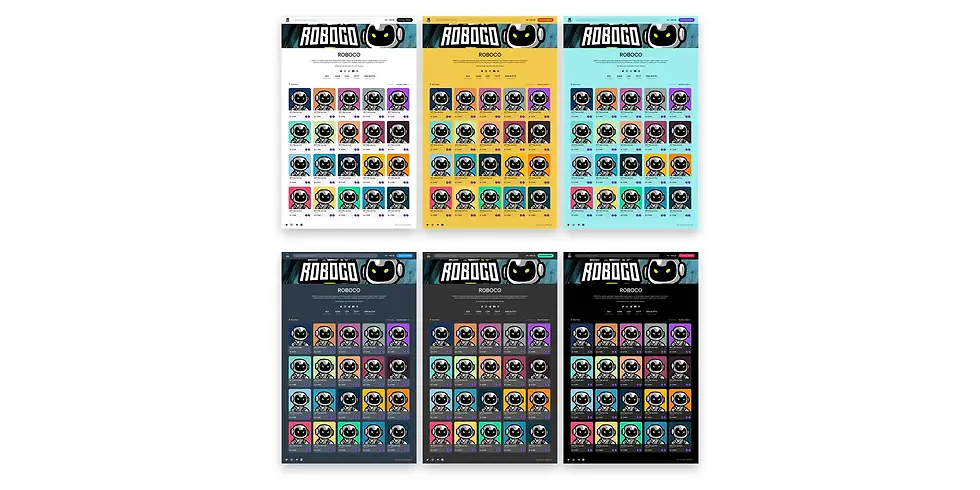
Creators can customize the overall visual style of their storefront through theme settings.
These settings allow creators to switch between light and dark themes while also adjusting key visual elements such as button colors and typography styles. This gives creators control over the look and feel of their storefront while maintaining visual consistency across the platform.

Theme Settings
Navigation Link Settings
Many NFT projects rely on channels outside the marketplace — such as community platforms, official project websites, or social media — to engage with their audience. The navigation link settings allow creators to add external links directly within the storefront, making it easier for collectors to access these resources.
By enabling seamless navigation to external sites, the storefront can extend beyond its immediate content and connect visitors with the broader ecosystem surrounding the project. This helps creators strengthen community engagement while giving collectors quick access to relevant information.

Navigation Settings
Hero Section Settings
Creators can configure how the hero section appears on their storefront through layout and content settings.
These controls allow creators to choose between different hero layouts, update visual content, and configure promotional elements such as sales campaigns or featured NFTs.
This gives creators flexibility in how they introduce their project while keeping the configuration process straightforward.

Hero Settings
Roadmap and Team Settings
Creators can configure the roadmap and team sections that appear within the storefront’s About area.
These sections help provide transparency around the project’s development plans and introduce the people behind the project. Including this information helps build trust with collectors evaluating the project.

Roadmap and Team Settings
FAQ Settings
Creators can create and manage a list of frequently asked questions that address common concerns collectors may have about the project.
This section helps reduce uncertainty by answering questions around utility, ownership, project timelines, or minting mechanics. It also allows creators to proactively communicate important information without requiring collectors to search elsewhere.

FAQ Settings
Fee Settings
Creators can configure the transaction fee structure associated with their storefront sales.
These settings allow creators to define how fees are applied during purchases, ensuring transparency for collectors while giving creators control over how their storefront transactions are structured.

Fee Settings
Overcoming Challenges
Building this feature was not just about designing the interface — it was also about navigating the realities of working within a fast-moving product team. While the goal was clear, the process required constant alignment across product, engineering, and design.
Several challenges shaped how the team worked and how the feature ultimately evolved.
Designing with Incomplete Information
In a fast-paced environment, we didn’t always have the luxury of a perfectly structured design process. Research insights often came gradually through PM-led discovery, user interviews, and ongoing conversations with creators and collectors.
Rather than waiting for complete information, I approached design as an iterative process — creating prototypes early, testing them with users when possible, and refining the experience based on feedback. This allowed the team to keep momentum while still validating key decisions along the way.
Aligning Product Vision Across the Team
Because this feature touched both the collector experience and creator tooling, it required coordination across multiple perspectives. Product managers focused on marketplace growth, engineers needed scalable solutions, and design had to ensure the experience remained intuitive for both creators and collectors.
To keep alignment, many of our discussions happened through collaborative working sessions where we reviewed flows, challenged assumptions, and iterated quickly. These conversations helped ensure that design decisions were grounded not just in usability, but also in product strategy and technical feasibility.
Balancing Speed with Thoughtful Design
Since parts of the platform already had a small design system and reusable components, we were able to move quickly into mid- and high-fidelity designs. While this accelerated production, it also required careful attention to ensure new features still felt cohesive within the broader platform.
To address this, I focused on reusing existing patterns where possible while extending the design system only when necessary. This helped maintain consistency while still allowing the storefront experience to feel unique and flexible for creators.
Impact & Results
Rapid Creator Adoption
Within the first few months, creators began actively building storefronts to present their projects in a more branded and structured way.
-
2 months post-launch: 21 storefronts created
-
4 months post-launch: 483 storefronts created
-
5 months post-launch: an additional 71 new stores (+29%)
The growth indicated strong interest from creators looking for more control over how their collections were presented within the marketplace.
Following the launch of the Custom NFT Storefront, creators quickly began adopting the feature as a new way to showcase and sell their collections. Over the months after release, the storefront experience demonstrated strong growth in creator adoption, user engagement, and marketplace activity.
Active Creator Participation
Adoption translated into real activity on the platform.
-
74% of storefront creators listed NFTs for sale
-
Storefront creators contributed 16% of all marketplace listings
-
57–62% of storefronts had at least one actively listed item
These numbers showed that creators were not just experimenting with the feature — they were actively using it to sell and manage their collections.
Feature Adoption and Customization
Creators also began exploring the customization capabilities of the storefront system.
-
17% of new stores adopted the multiple collections feature early on
-
Within months, adoption grew to 54% of new stores
-
24% of stores implemented custom fees to tailor their sales structure
This demonstrated that creators valued the flexibility provided by the customization tools.
Collector Engagement and Trading Activity
Several storefronts quickly became hubs of collector activity. Projects such as Crypto Pirates, ApeMove, and Wine Protocol attracted strong engagement and trading volume from collectors.
Interestingly, storefront visitors demonstrated higher trading value per user, averaging $200 per trader, compared to $88 per trader on the broader marketplace. This suggested that collectors visiting project storefronts were often more engaged and purchase-ready.
Strengthening the Marketplace Ecosystem
-
The storefront system complemented the broader marketplace rather than replacing it.
-
58–71% of trading volume still originated from the marketplace discovery experience
-
Storefronts served as high-engagement destinations for specific communities and projects
-
Together, the two experiences created a balanced ecosystem — discovery through the marketplace and deeper engagement through project storefronts.

Reflection & Key Learnings
Designing the Custom NFT Storefront was an opportunity to work on a feature that served two very different audiences — creators building their projects and collectors exploring and purchasing NFTs. The challenge was creating a system flexible enough for creators to express their projects while still maintaining a consistent and trustworthy experience for collectors.
Working on this feature reinforced how important cross-functional collaboration is in shaping successful products. Much of the early discovery and research came through product-led efforts and user interviews, and being involved in those conversations helped ground design decisions in real user needs. From there, rapid iteration, prototyping, and testing allowed the team to refine the experience while keeping development moving forward.
One key takeaway was the importance of balancing flexibility with structure. Creators wanted the ability to customize their storefronts and tell their project stories, but too much freedom could easily create inconsistent or confusing experiences for collectors. Designing a modular system of configurable sections allowed us to support customization while still maintaining a cohesive marketplace experience.
Another important learning was the value of designing for scalability early. By building the storefront around reusable components and configurable settings, the feature created a flexible foundation that could support future enhancements without requiring significant redesigns.
Looking back, the Custom NFT Storefront became more than just a new feature. It introduced a new way for creators to present their work within the marketplace while giving collectors a richer and more engaging way to explore NFT projects.