
Thea Carbon
Making Carbon Offsetting Accessible
Year
Feb 2023 – Mar 2023
Role
UI/UX Designer
Tools
Figma
Adobe Photoshop
Adobe Illustrator

Project Overview
In early 2023, I joined Thea Carbon as a freelance UI/UX designer to help design the MVP of a new sustainability platform aimed at making carbon offsetting more accessible to everyday users.
The product, Thea Web App, was created to help people understand their environmental impact and take meaningful action to reduce it. Through the platform, users can estimate their personal carbon footprint, offset their emissions by supporting verified environmental projects, and participate in a new model of sustainability powered by blockchain technology.
Unlike traditional carbon offset platforms, Thea explored a more interactive approach. Instead of simply purchasing carbon credits, users could also engage with Nature-Based Tokens (NBTs) — digital tokens connected to carbon offset initiatives — allowing them to buy, manage, and trade carbon assets using a connected crypto wallet.
The vision behind the product was to bridge two worlds that rarely intersect smoothly:
the Voluntary Carbon Market, where environmental credits are traded, and Web3 infrastructure, where digital assets and tokenized systems are becoming increasingly common.
Working in a small startup team consisting of the founder, a developer, another designer, and myself, I led the UI and UX design for the responsive web application. Within a tight two-month timeline, my responsibility was to design the product’s core user journey — translating a complex system of carbon markets, sustainability practices, and crypto transactions into an experience that felt understandable and approachable.
The challenge wasn’t just designing an interface. It was designing a system that could help users move from climate awareness to meaningful environmental action.
This case study explores how I approached that challenge while designing a product at the intersection of sustainability, finance, and emerging technology.
The Challenge

Thea Carbon aimed to simplify how people participate in the voluntary carbon market, a space that is often complex, opaque, and difficult for everyday users to navigate. While the vision was compelling, designing the platform revealed several interconnected challenges that needed to be addressed for the product to succeed.
Navigating a Complex and Opaque Market
The voluntary carbon market can be difficult for individuals to understand. Carbon credits are often traded through intermediaries, pricing structures are not always transparent, and the environmental value of different projects can vary significantly.
For new users, this creates confusion around a fundamental question: what exactly am I buying, and how does it help the planet?
One of the platform’s core challenges was therefore to translate a complicated market into an experience that felt understandable and transparent. Users needed to quickly grasp how their actions on the platform connected to real-world environmental impact.
Bridging Sustainability and Web3
Thea did not only aim to simplify carbon offsetting — it also introduced a more innovative layer through blockchain integration.
Users could connect crypto wallets, purchase Nature-Based Tokens (NBTs), and transact using USDC. While this created exciting possibilities for transparency and asset ownership, it also introduced unfamiliar concepts for many users.
For people new to Web3, terms like tokens, wallets, and blockchain transactions can feel intimidating. The challenge was to design an experience that allowed users to benefit from this technology without requiring deep technical knowledge.
Building Trust in Carbon Credits
Trust is one of the biggest issues within the voluntary carbon market. Some carbon offset projects have been criticized for providing limited environmental impact, leading to skepticism among potential participants.
Because of this, the platform needed to clearly communicate the legitimacy and credibility of the projects being supported. The experience had to reinforce transparency and give users confidence that their contributions were making a meaningful difference.
Designing Within Startup Constraints
The project was developed under tight startup conditions. The goal was to design a fully conceptualized MVP within two months, which would be presented to potential investors and partners.
Without the time for extensive user research, the design process relied heavily on the expertise of the founders, industry insights, and iterative feedback loops within the small team.
At the same time, balancing the founder’s deep knowledge of the sustainability sector with usability considerations required constant discussion and refinement. Many concepts that were familiar to industry experts needed to be translated into interfaces that would make sense to first-time users.
Ultimately, if the platform failed to make the system understandable, users could easily feel overwhelmed, unsure about what they were purchasing, or hesitant to engage with the product altogether.
Design therefore became the critical bridge between a complex environmental ecosystem and a user experience that people could confidently navigate.

Design Goals
Once the core challenges were identified, the next step was defining clear design goals that would guide the experience of the platform. The objective wasn’t just to design a functional interface, but to translate a complex sustainability and Web3 ecosystem into something users could easily understand and confidently interact with.
To achieve this, the design approach focused on four key principles.
Guiding Users Toward Action
Understanding environmental impact is only the first step. The platform also needed to help users take meaningful action.
The user journey was designed as a progression — from learning about one’s carbon footprint, to exploring offset opportunities, and eventually participating in sustainability initiatives through the platform. By structuring the experience in this way, the interface could gently guide users toward decision-making without overwhelming them with information.
The goal was to create a system where sustainability participation felt approachable rather than complicated.
Making Sustainability Understandable
For many users, concepts like carbon footprints, carbon credits, and offsetting emissions are unfamiliar. One of the primary goals was to make these ideas easier to grasp through a guided journey.
Instead of presenting sustainability data in an overwhelming way, the experience was designed to gradually introduce users to the concept of their environmental impact. Starting with a carbon footprint estimation helped users build awareness before encouraging them to take action through carbon offsetting.
This approach allowed the platform to transform abstract environmental concepts into something more tangible and personal.
Bridging Web2 and Web3 Experiences
Another key goal was addressing the gap between traditional digital experiences and emerging Web3 systems.
Not all users are familiar with blockchain technology or crypto wallets, so the platform introduced two separate pathways within the experience. One path allowed users to directly offset their emissions in a straightforward way, while the other enabled more advanced participation through Nature-Based Tokens and blockchain-based transactions.
Separating these flows allowed the platform to remain accessible to beginners while still supporting more advanced Web3 interactions for users who were comfortable with the technology.
Building Trust Through Transparency
Trust was an essential element of the design. Because the voluntary carbon market has faced skepticism regarding project legitimacy and impact, the platform needed to communicate credibility and transparency.
The design focused on clearly presenting information about carbon offset initiatives and giving users visibility into how their contributions supported real environmental projects. By making the process easier to understand, the experience aimed to reduce uncertainty and encourage user confidence in the platform.
Ultimately, the design goals centered around one overarching idea: turning climate awareness into meaningful, accessible action. Every design decision aimed to simplify complexity, guide users through unfamiliar systems, and build trust in a platform operating at the intersection of sustainability and emerging technology.
Design Process
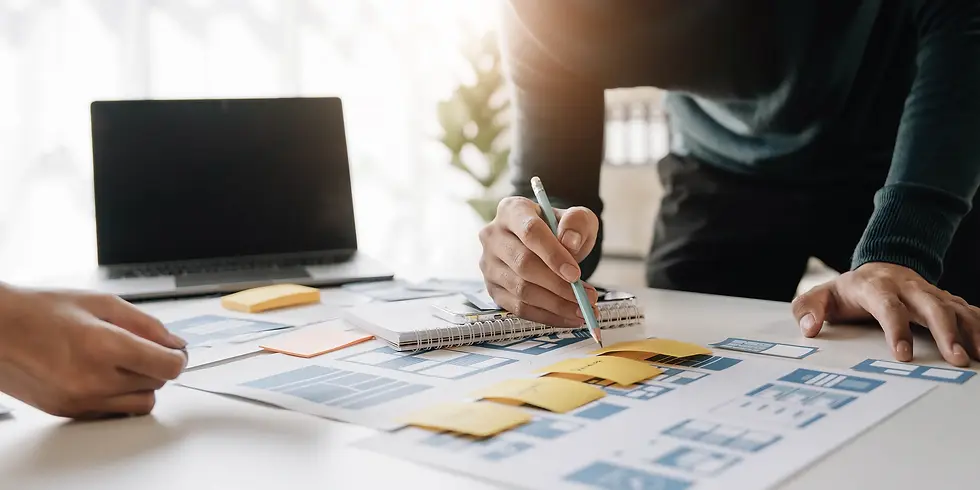
Designing Thea Web App required navigating an unfamiliar industry while working within the fast-paced environment of an early-stage startup. Without the luxury of extensive user research, the design process relied heavily on collaboration, industry insights from the founders, and continuous iteration.
Rather than following a rigid framework, the process evolved into a series of collaborative stages that allowed the team to explore ideas, test concepts, and refine the product experience quickly.
Discovery Through Stakeholder Expertise
Since the project operated under tight MVP timelines, traditional user research was not feasible at the early stages. Instead, the discovery phase relied on the expertise of the founders, who had extensive experience in the sustainability and voluntary carbon market space.
Through a series of working sessions with the founder, we explored how carbon credits function within the broader ecosystem and how blockchain technology could integrate into the platform. These discussions were critical in shaping the product’s core direction and identifying the key features the MVP needed to demonstrate.
During this stage, I worked closely with the founder to map out user journeys and high-level product flows, helping translate complex industry concepts into potential user interactions within the platform.
This process allowed us to define how users would move through the experience—from understanding their carbon footprint to taking action through carbon offsetting or participating in token-based sustainability initiatives.
Learning the Market Through Competitive Analysis
Because the voluntary carbon market is still evolving, understanding how other platforms approached similar problems became an important part of the design process.
I conducted a competitive review of existing sustainability and carbon offset platforms, examining how they presented information, structured user journeys, and communicated environmental impact.
Interestingly, the analysis revealed that there was no clear standard for designing carbon offset platforms. Many existing solutions struggled with transparency, overly technical explanations, or fragmented user experiences.
Rather than simply replicating competitor patterns, this insight encouraged us to focus on clarity and accessibility, ensuring the product would feel understandable even for users encountering carbon markets for the first time.
Exploring Ideas Through Collaborative Ideation
Once we had a clearer understanding of the problem space, the team began exploring potential solutions through collaborative brainstorming sessions.
These sessions involved the founder, the developer, another designer, and myself. The discussions helped us evaluate different approaches to structuring the platform and explore how sustainability concepts could be translated into interactive product features.
One important outcome of these sessions was the decision to create separate pathways for Web2 and Web3 interactions. This allowed the platform to remain accessible to users who simply wanted to offset their emissions, while also supporting more advanced functionality for users interested in tokenized sustainability assets.
This approach became a key structural element of the product experience.
Iterative Design and Prototyping
With the product direction established, the design process moved into wireframing and interface exploration.
I began by creating low-fidelity wireframes to define the structure of the platform, focusing on content hierarchy, feature placement, and overall user flow. These early concepts helped the team quickly review how different features connected across the product.
As the design progressed, the wireframes evolved into high-fidelity interface designs, allowing us to refine visual hierarchy, interaction patterns, and overall usability.
During this stage, I also created interactive prototypes in Figma to simulate key user flows. These prototypes helped stakeholders and the developer better understand how users would navigate the platform and interact with its features.
Working closely with both the founder and the developer ensured that design decisions aligned with both product vision and technical feasibility.
Continuous Feedback and Validation
Although formal user research was limited, the team still incorporated testing and feedback loops throughout the process.
Once key design flows were completed, we conducted informal usability testing with internal stakeholders to evaluate clarity and usability. These sessions helped identify areas where the experience could be simplified or better explained.
Feedback from these reviews informed further design iterations, allowing the product to evolve toward a more intuitive and coherent experience.
This iterative approach ensured that the final MVP not only communicated the platform’s vision effectively but also demonstrated how users could navigate and interact with a complex sustainability ecosystem in a straightforward way.
The Solution
To address the complexity of carbon markets and Web3 systems, the platform was designed around a simple principle: help users move from awareness to action through a guided experience.
Rather than presenting sustainability tools all at once, the product was structured as a journey that gradually introduces users to their environmental impact before enabling them to take meaningful steps toward offsetting it.
The experience was built around four key components that work together to support this journey.
Carbon Footprint Estimator

The starting point of the platform is the Carbon Footprint Estimator, designed to help users understand the environmental impact of their daily activities.
Users can choose between two estimation methods depending on how detailed they want the calculation to be.
The Basic Estimator provides a quick overview of a user’s estimated carbon footprint based on general inputs such as age and country of residence. This option allows users to gain immediate insight into their environmental impact without spending too much time completing a lengthy form.
For users who want a deeper understanding of their footprint, the Advanced Calculator provides a more comprehensive analysis. This version considers multiple aspects of a user’s lifestyle, including transportation habits, energy consumption, dietary choices, and waste management.
As users complete the form, their estimated carbon footprint updates in real time, allowing them to immediately see how different lifestyle choices influence their environmental impact. This dynamic feedback helps make the experience more engaging while also encouraging users to reflect on the environmental consequences of everyday decisions.
The estimator was aligned with the ICAO Carbon Emission Calculator, ensuring that the calculations follow an established industry framework and provide reliable results.
By beginning the experience with awareness and education, the platform helps users better understand the scale of their impact before encouraging them to offset it.
.jpg)
Carbon Footprint Estimator (Basic)
%20-%20Default.jpg)
Carbon Footprint Estimator (Advance)
Action Central

Once users understand their carbon footprint, the platform guides them to Action Central, a hub designed to help them take the next step in their sustainability journey.
Action Central introduces two distinct pathways that reflect different levels of user familiarity with sustainability tools and blockchain technology.
The first path, OffsetDirect, provides a straightforward way for users to offset their carbon footprint. This option allows users to purchase and retire Nature-Based Voluntary Carbon Credits during designated offset events. The experience is intentionally simple, enabling users to take immediate action without needing to understand the underlying technical infrastructure.
The second path, Web3 Detour, introduces a more interactive approach. This route allows users to engage with the platform’s tokenized ecosystem through Nature-Based Tokens (NBTs). By separating these two pathways, the platform accommodates both users who prefer a simple sustainability action and those who want deeper engagement through Web3 functionality.
This structure helps maintain accessibility while still supporting more advanced forms of participation.

Action Central
Nature-Based Tokens (NBTs)
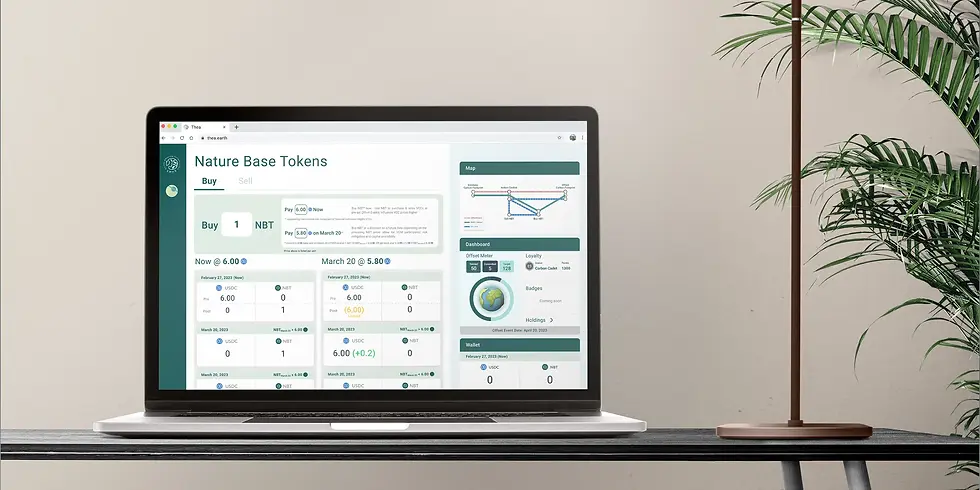
The Nature-Based Tokens (NBTs) feature introduces a new way for users to participate in the voluntary carbon market through tokenized carbon assets.
Within this section of the platform, users can acquire NBTs using USDC, allowing them to engage with carbon offset initiatives while participating in a digital asset ecosystem.
These tokens provide several forms of interaction. Users can purchase NBTs to support carbon offset events, hold them as part of their sustainability portfolio, or sell them in exchange for USDC. This introduces a financial dimension to the platform, where sustainability participation can also interact with digital asset ownership.
The design challenge here was to present token-based transactions in a way that felt understandable even for users who might not be deeply familiar with crypto systems. Clear transaction flows and simplified interaction patterns helped reduce the complexity typically associated with Web3 platforms.
By integrating tokenized assets, the platform offers users a more dynamic way to participate in sustainability initiatives beyond traditional carbon credit purchases.

Buy NBT

Sell NBT
Offset Carbon Footprint

The final component of the experience enables users to offset their calculated carbon footprint through verified environmental projects.
Users can choose between two approaches when offsetting their emissions.
The first option allows Thea to automatically allocate carbon credits from carefully vetted projects, providing a quick and convenient solution for users who prefer a simplified experience.
Alternatively, users can explore a curated list of environmental projects and select specific initiatives they want to support. This gives users greater control over where their contributions are directed, allowing them to align their offsetting efforts with causes that resonate with their values.
Each carbon credit represents a measurable reduction or removal of carbon emissions, creating a direct link between user participation and real-world environmental impact.
By combining footprint estimation, guided actions, tokenized participation, and verified carbon offsets, the platform creates a complete ecosystem where users can move from understanding their environmental impact to actively contributing to global sustainability efforts.

Offset Project List

Offset Project Details
Overcoming Challenges
Designing Thea Carbon was not only about simplifying a complex product — it also required navigating several challenges throughout the design process. From shaping early product ideas to designing unfamiliar Web3 experiences, the project required constant collaboration, iteration, and problem solving.
Designing for an Unfamiliar Space: Web3
Another challenge was designing for Web3 interactions, particularly wallet connections and crypto-based transactions.
Because many potential users may not be familiar with crypto wallets or blockchain transactions, these flows needed to feel simple and approachable while still supporting the technical requirements of the platform.
To address this, I focused on:
-
Simplifying wallet connection flows
-
Designing clear transaction steps
-
Ensuring users understood what actions they were taking
The goal was to reduce friction for users who may be interacting with crypto-enabled features for the first time.
Turning Early Ideas into a Structured Product
At the start of the project, the platform existed mostly as a product vision from the founder rather than a fully structured experience. Many features and ideas were still evolving, which meant the first step was translating these concepts into clear user journeys.
Working closely with the founder, I helped map out:
-
Core user flows
-
Platform structure
-
Key features needed for the MVP
This process helped transform a broad idea into a structured product experience that could realistically be built within the MVP timeline.
Managing Iteration in a Fast MVP Timeline
The project timeline for the MVP was relatively short, which meant designs needed to move quickly from low-fidelity concepts to high-fidelity interfaces.
As the product evolved, some features changed during the high-fidelity stage. Rather than treating these as setbacks, the design process remained flexible and iterative.
Interactive prototypes were created to:
-
Communicate experiences clearly to the founder
-
Help the developer understand interaction flows
-
Align the team before development
This helped ensure the team stayed aligned while moving quickly toward the MVP launch goal.
Balancing Simplicity with Product Complexity
One of the ongoing design challenges was balancing simplicity for users with the inherent complexity of carbon markets and crypto-based systems.
Instead of hiding complexity entirely, the approach focused on:
-
Breaking information into digestible steps
-
Guiding users through workflows
-
Making complex concepts easier to understand through interface design
This allowed the platform to remain approachable without sacrificing transparency or functionality.
Impact & Results

Transforming a Complex Idea into a Structured Product
One of the biggest outcomes of the project was helping translate the founder’s vision into a coherent platform experience. Through user flows, journey mapping, and interface design, the product evolved from a collection of ideas into a structured application with clear user pathways.
This made it significantly easier for the team to:
-
Communicate the product vision
-
Demonstrate how the platform would work in practice
-
Present the concept to potential investors
Instead of explaining the product only through ideas or documents, the team could now showcase a tangible product experience.
Although Thea Carbon was developed as an MVP, the design work played an important role in turning an early-stage concept into a clear, presentable product experience that could be shared with potential investors and stakeholders.
Making Carbon Markets More Understandable
A major focus of the design was making carbon offsetting more approachable for users who may not be familiar with the space.
Features like the Carbon Footprint Calculator helped transform a complex sustainability concept into something users could immediately engage with. By guiding users through simple questions and showing real-time results, the platform created a clearer connection between daily activities and environmental impact.
This helped position the platform as something that was not only technical, but also educational and accessible.
Supporting Web3 Interactions in a More Approachable Way
Because the platform included crypto wallet integration and token transactions, the design also needed to bridge the gap between traditional Web2 users and Web3 functionality.
The UX approach focused on simplifying these interactions so that users could:
-
Connect wallets
-
Complete transactions
-
Manage tokens within the platform
in ways that felt understandable and guided, rather than intimidating.
Enabling Development Through Clear Design Handoff
The final designs and prototypes provided developers with clear visual and interaction guidance during implementation. Because the flows and interface states were well defined, the development team was able to follow the designs when building the MVP.
This helped reduce ambiguity and ensured the product being built stayed aligned with the intended user experience.
Establishing the Foundation for the Product
While the MVP represented the first version of the platform, the design work established the core product structure and experience framework that future iterations could build upon.
The project demonstrated how thoughtful UX design could:
-
Clarify complex product ideas
-
Make emerging technologies more approachable
-
Transform a startup concept into a functional product experience

Reflection & Key Learnings
Designing Thea Carbon pushed me to work at the intersection of sustainability, finance, and emerging Web3 technology—industries that were completely new to me at the start of the project. One of the biggest challenges was translating complex ideas like carbon credits, blockchain transactions, and sustainability metrics into an experience that felt clear and approachable for users.
Working closely with the founder, I helped transform early product ideas into structured user flows, features, and interface concepts. This process strengthened my ability to think beyond individual screens and approach design from a product perspective—connecting business goals with intuitive user experiences.
Another key lesson was learning how to simplify complexity. The platform combined multiple unfamiliar concepts, so designing clear flows and interactions was critical to helping users understand what they were doing and why it mattered.
Overall, this project reinforced the value of collaboration, adaptability, and clear UX thinking when designing products in complex or emerging industries. It also showed me how thoughtful design can turn a technically complex system into something people can actually understand and engage with.