
vivovii
Designing Growth, One Habit at a Time
Year
2016 - 2018
Role
UI/UX Designer
(Started as Junior Graphics & Web Designer)
Tools
Figma
Sketch
Zeplin
Adobe Photoshop
Adobe Illustrator
Industry
Personal Development / Workplace Learning

Company Context
Vivovii is a company focused on helping individuals and organizations develop personal and professional skills through behavioral-science-based growth programs. Its platform translates research on leadership, communication, and habit formation into practical digital tools that encourage consistent learning and self-development.
The Vivovii platform is used by both individuals and organizational teams. Individuals use it to build skills and track personal progress, while organizations use it to support employee development, align growth initiatives with team goals, and measure progress across teams. By turning abstract development concepts into structured experiences, Vivovii helps users translate learning into consistent daily action.
Project Overview
Vivovii was created to make personal and professional growth more structured and actionable. Traditional development tools often feel abstract or difficult to integrate into daily routines, leaving users unsure where to start or how to measure progress.
The platform was designed to translate behavioral science concepts into practical digital experiences that help individuals and teams build skills, form habits, and track meaningful progress. By combining structured learning paths with daily actions and feedback, Vivovii aimed to make personal development easier to understand, engage with, and sustain over time.
My Role & Responsibilities
I joined Vivovii as a Junior Graphics and Web Designer and gradually transitioned into a UI/UX design role as the product evolved. Over time, I became responsible for shaping the platform’s user experience, including interaction flows, interface design, and feature development.
Working closely with the co-founder, behavioral science experts, and developers, I contributed to the design of several core product features, including Tip Cards, Insight Cards, Journeys, 360 Assessments, and GrowthOp. My work focused on translating behavioral science concepts into clear, engaging digital experiences that users could easily integrate into their daily routines.
Key Responsibilities:
• Designing user flows and interaction patterns across the platform
• Creating wireframes and high-fidelity UI designs for core features
• Translating behavioral science concepts into intuitive product experiences
• Collaborating with leadership, content experts, and developers
• Iterating on designs based on internal feedback and testing
• Preparing design assets and specifications for development
The Problem
Personal and professional growth is often difficult to turn into consistent action. Individuals want to improve skills such as leadership, communication, and collaboration, but struggle to identify where to begin, maintain motivation, and track meaningful progress over time. At the same time, organizations face challenges supporting employee development at scale while keeping growth aligned with team and business objectives.

Challenges for Individual Users
Many individuals were motivated to improve their personal and professional skills but lacked a structured way to practice and track their development. Growth often felt abstract, making it difficult to turn learning into consistent habits.
-
Lack of guidance — uncertainty about which skills to focus on or how to begin
-
Time constraints — difficulty fitting growth activities into daily routines
-
Low motivation — progress often felt invisible without feedback or recognition
-
Information overload — an abundance of advice without clear action steps

Challenges for Organizations
Organizations faced similar difficulties when supporting employee development across teams. Without clear tools for tracking participation and progress, it was difficult to understand whether growth initiatives were making a meaningful impact.
-
Limited visibility into employee development and progress
-
Difficulty aligning personal growth with organizational goals
-
Low engagement in learning and development programs
Impact of the Problem
These challenges created a gap between the desire for growth and the ability to practice it consistently. Individuals struggled to sustain development habits, while organizations lacked visibility into how employees were progressing. Addressing this gap required a platform that could translate personal development concepts into structured, actionable experiences for both individuals and teams.
Design Goals
To address the challenges identified earlier, the design focused on creating an experience that made personal and professional growth easier to understand, act on, and sustain over time. The following goals guided the product’s UX decisions throughout the project.

Simplify the Growth Experience
Personal development can feel overwhelming when users are faced with too many ideas, tools, or recommendations. The platform needed to reduce complexity and highlight the most meaningful actions. By prioritizing clear navigation, structured content, and focused interactions, the design aimed to help users quickly understand what to do next and begin taking action without hesitation.
Support Motivation and Habit Formation
Growth requires consistent action, not just access to information. The experience was designed to encourage regular engagement through small, rewarding interactions. Features such as progress indicators, achievement badges, and interactive prompts helped reinforce a sense of progress and encouraged users to build sustainable development habits over time.
Balance Individual and Organizational Needs
Vivovii served two primary audiences: individuals pursuing personal growth and organizations supporting team development. The design needed to remain simple and motivating for individual users while still providing organizations with meaningful insight into participation and progress. Achieving this balance ensured the platform could deliver value to both users and the organizations investing in their development.
Design for Scalability
The platform was built to support expanding content and evolving organizational needs. Core components such as Journeys, Tip Cards, and Insight Cards were designed as flexible structures that could accommodate new topics, skills, and learning paths. This approach allowed the product to grow over time without requiring fundamental changes to the user experience.
Design Process
Designing Vivovii required translating complex personal development concepts into clear, engaging digital experiences. The process combined collaborative exploration, rapid prototyping, and continuous iteration, allowing the team to evolve ideas while keeping both user needs and organizational goals in focus.
Research & Discovery
We began by exploring the problem space to better understand both individual users and organizational clients. Workshops and discussions with leadership, behavioral science experts, and the internal team helped identify key pain points, motivations, and goals for the platform.
These sessions surfaced several challenges, including unclear growth paths, inconsistent motivation, and difficulty tracking progress. Insights from this stage helped shape early product concepts and ensured the design remained grounded in real user behaviors and development needs.


Ideation & Concept Development
Concept development was highly collaborative. Leadership, behavioral experts, designers, and developers worked together to translate personal growth principles into actionable digital experiences.
Ideas were brainstormed, prioritized, and evaluated based on user value, technical feasibility, and alignment with the platform’s mission. This process produced early concepts for features, interaction flows, and growth frameworks that could support both individual development and organizational insight.
Prototyping & Validation
Interactive prototypes were created to explore user flows, navigation patterns, and feature interactions. These prototypes were reviewed with leadership, content experts, and the internal team, with occasional feedback from potential users.
Testing helped reveal friction points, unexpected behaviors, and areas where the experience could be simplified. Insights from these sessions informed adjustments to layout, interaction design, and content structure.
Iteration & Collaboration
Design evolved through continuous iteration and close collaboration across the team. Feedback from behavioral experts ensured the experience reflected the intended development framework, while input from developers helped validate technical feasibility.
Working with a small and agile team required flexibility. Rapid prototyping, informal feedback loops, and frequent design adjustments allowed us to refine the platform while adapting to evolving content and product requirements.

Designing the Growth Experience
To address the challenges identified earlier, the platform needed to translate personal development concepts into clear, actionable experiences that users could integrate into their daily routines. The design focused on simplifying growth while maintaining meaningful structure for both individuals and organizations.
Rather than relying on a single feature, Vivovii introduced a set of interconnected components that supported different aspects of development. These elements worked together to guide users from small daily actions to deeper reflection, structured learning paths, and measurable progress.
The following sections highlight several of the core product experiences designed to support this growth journey.

Tip Cards
Tip Cards are short, actionable prompts designed to help users practice personal and professional growth in small, manageable steps. Each card presents a focused activity or reflection that encourages users to apply development concepts in their daily routines.
Problem
Many users struggled to translate personal development advice into practical action. Growth resources often presented broad ideas or long-form content, making it difficult for users to know what to do next or how to apply the concepts in everyday situations.
Design Decision
To make growth more actionable, we introduced Tip Cards — small, focused prompts that encourage specific behaviors. By presenting development activities in short, digestible formats, the platform helps users engage with growth in a way that feels achievable and practical.

How It Works
Tip Cards guide users toward a single action or mindset shift. The interface prioritizes clarity and simplicity so users can quickly understand the suggestion and apply it immediately. Cards can be completed individually or as part of structured growth journeys within the platform.
Why It Matters
Breaking development into small, actionable steps reduces overwhelm and helps users build consistent habits. Instead of committing to large or abstract goals, users can make steady progress through manageable actions that gradually strengthen new behaviors and skills.

Insight Cards
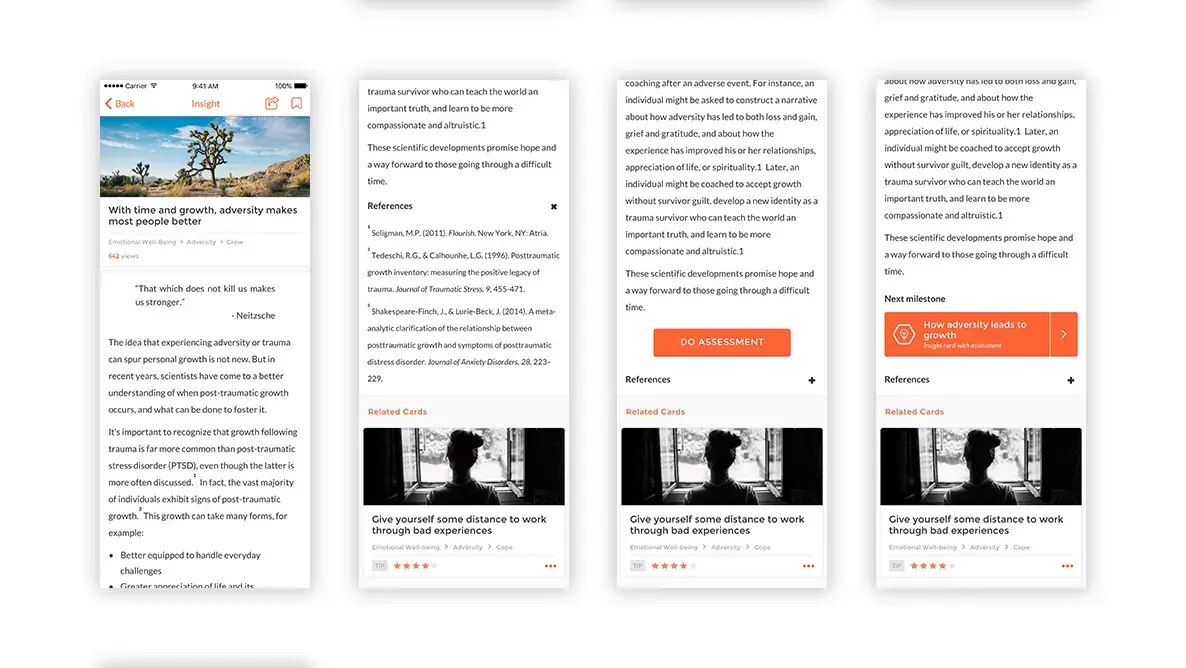
Insight Cards provide short reflections and learning moments that help users better understand personal development concepts. While Tip Cards focus on action, Insight Cards offer context and perspective, helping users connect everyday behaviors with broader growth principles.
Problem
Users often struggled to understand why certain behaviors or practices mattered for their development. Without clear context, growth activities could feel mechanical or disconnected from larger goals, reducing long-term motivation and engagement.
Design Decision
Insight Cards were designed to complement actionable prompts by introducing short, thought-provoking insights. These cards present key ideas related to leadership, communication, and self-awareness, helping users pause, reflect, and internalize development concepts.
How It Works
Each Insight Card presents a concise idea, observation, or reflection designed to encourage deeper thinking. The interface emphasizes readability and focus, allowing users to quickly absorb the message while connecting it to their current growth journey or recent activities within the platform.
Why It Matters
By combining reflection with action, Insight Cards help users develop a stronger understanding of the behaviors they are practicing. This balance supports more meaningful engagement, encouraging users to not only complete growth activities but also reflect on how those actions contribute to their personal and professional development.

Journeys
Journeys provide structured development paths that guide users through a series of growth activities over time. By combining actionable prompts and reflective insights, Journeys help users focus on specific skill areas such as leadership, communication, or teamwork.
Problem
While individual growth activities can be helpful, many users struggled to maintain momentum without a clear path forward. Without structure, development efforts could feel fragmented, making it difficult for users to see how individual actions contributed to larger goals.
Design Decision
To address this, we introduced Journeys as guided sequences of growth experiences. Each Journey groups related Tip Cards and Insight Cards into a focused progression, allowing users to explore a skill area step by step rather than navigating disconnected activities.

How It Works
Journeys organize development content into a structured flow that users can follow over time. Each step introduces a small action or reflection that builds on the previous one, helping users gradually develop new habits and perspectives while staying engaged with the process.
Why It Matters
Providing a clear path helps users stay motivated and understand how individual activities contribute to long-term growth. Journeys transform scattered development resources into a cohesive experience, making it easier for users to commit to meaningful progress over time.

360 Assessment
The 360 Assessment feature provides users with structured feedback from peers, managers, and collaborators. By gathering perspectives from multiple sources, the platform helps individuals better understand their strengths, growth areas, and how their behaviors are perceived within a team.
Problem
Personal development often relies heavily on self-reflection, which can be limited or biased. Many users lacked clear external feedback about their behaviors and performance, making it difficult to identify blind spots or understand how their actions affected others.
Design Decision
To support more balanced development, we introduced a 360-degree feedback system that allows users to receive input from people they work with. The goal was to create a structured yet approachable way for users to gain insight into their professional behaviors while maintaining clarity and ease of use.

How It Works
Users can invite colleagues, managers, or peers to provide feedback through guided assessment prompts. Responses are aggregated and presented in a clear format that highlights patterns, strengths, and areas for improvement. The design emphasizes readability and clarity so users can easily interpret the feedback and incorporate it into their development journey.
Why It Matters
External feedback adds an important dimension to personal growth. By combining self-guided activities with perspectives from others, the platform helps users develop a more accurate understanding of their behaviors and progress. This makes development more meaningful for individuals while giving organizations better visibility into team growth.

GrowthOp
GrowthOp introduces structured growth opportunities that encourage participation across teams. These initiatives allow organizations to promote specific development activities and create shared experiences that support learning, collaboration, and engagement.
Problem
While individual development tools are valuable, organizations often struggle to encourage consistent participation in growth programs. Without clear opportunities or shared initiatives, engagement can decline and development efforts may become fragmented across teams.
Design Decision
GrowthOp was designed as a way for organizations to introduce focused growth initiatives that bring employees together around specific development themes. The feature provides a structured format for launching opportunities that encourage users to engage with growth activities in a coordinated and motivating way.

How It Works
Organizations can introduce GrowthOp initiatives that invite users to participate in targeted development experiences. These opportunities highlight specific skills or topics and encourage users to engage with related activities within the platform, reinforcing both individual learning and team participation.
Why It Matters
By connecting individual development with shared organizational initiatives, GrowthOp helps strengthen engagement across teams. It transforms growth from an isolated activity into a collaborative experience, supporting both personal development and a broader culture of continuous improvement.

Progress & Achievements
Progress and Achievements provide users with clear visibility into their development over time. By tracking completed activities and highlighting milestones, the feature helps users understand how their efforts contribute to meaningful growth.
Problem
One of the challenges in personal development is that progress often feels invisible. Without clear feedback or recognition, users may struggle to stay motivated or feel uncertain about whether their efforts are making an impact.
Design Decision
To reinforce motivation, we introduced visual indicators that track user activity and celebrate key milestones. The goal was to create a simple system that acknowledges progress while encouraging continued participation in growth activities.
How It Works
The platform tracks completed actions, reflections, and journey steps, presenting them through progress indicators and achievement markers. These visual cues allow users to quickly see how far they’ve come while reinforcing positive engagement with the platform.
Why It Matters
Recognizing progress helps transform development from a vague aspiration into a visible journey. By making achievements tangible, the feature encourages users to stay engaged and continue building growth habits over time.

Discover
Discover helps users explore the platform’s available growth content, making it easier to find activities, insights, and development paths that match their interests and goals.
Problem
As the platform expanded with more growth content, users needed a simple way to explore and locate relevant materials. Without a clear discovery experience, users could struggle to navigate the platform or miss valuable development opportunities.
Design Decision
We introduced the Discover section as a central space where users could browse available growth content. The design focused on presenting options in a clear and approachable way, allowing users to quickly identify topics, skills, or journeys that aligned with their personal development goals.
How It Works
The Discover interface organizes content into easily navigable categories, helping users browse different skill areas and development themes. This structure allows users to explore new growth opportunities while maintaining a clear overview of what the platform offers.
Why It Matters
By simplifying how users find content, Discover encourages continued exploration and engagement. It helps users move beyond their current activities and discover new areas of development, supporting a more dynamic and personalized growth experience.

Impact & Results
The work at Vivovii focused on transforming personal growth from an abstract concept into a structured digital experience. Through iterative design and internal testing, the platform began to demonstrate how clear actions, progress feedback, and guided journeys could support consistent development for both individuals and teams.
Turning Growth into Actionable Steps
I designed core product experiences such as Tip Cards, Insight Cards, and guided Journeys that translated behavioral science concepts into simple, actionable activities. These features helped users move from passive learning to daily practice by breaking personal development into manageable steps.
Improving Clarity and Motivation
Early testing with internal teams and select users showed increased clarity around what actions to take and how progress could be tracked. Visual progress indicators, feedback loops, and structured journeys helped users stay engaged and motivated to continue their growth activities.
Exploring Organizational Development Tools
I also contributed to early prototypes for features such as 360 Assessments and GrowthOp. These concepts explored ways organizations could track team development, gather feedback, and align individual growth with broader team objectives.
Establishing a Scalable Product Foundation
While the platform continued evolving after my departure, the design frameworks, interaction patterns, and feature concepts developed during this project helped shape the product’s early structure. These foundations supported the platform’s ability to scale its growth experiences for both individual users and organizations.
Reflection & Key Learnings
Designing Vivovii required translating complex behavioral science concepts into practical digital experiences. Much of the challenge involved turning abstract ideas—such as self-awareness, leadership, and habit formation—into clear actions that users could realistically integrate into their daily routines.
The project also reinforced the importance of close collaboration with cross-functional teams. Working alongside leadership, behavioral experts, and developers helped ensure that design decisions remained aligned with both the scientific foundations of the content and the technical realities of the platform.
Because the team operated in a fast-moving and experimental environment, many design decisions were validated through rapid prototyping and informal testing. Iterating quickly allowed us to identify friction in the experience and refine interactions to make growth activities easier to understand and complete.
Looking back, I would invest more time in structured user research earlier in the process to strengthen decision-making with deeper user insights. However, navigating uncertainty, adapting to evolving content, and designing within a small team environment helped strengthen my ability to balance strategy, usability, and feasibility.
This experience shaped how I approach product design today—focusing not just on interface design, but on creating systems that guide behavior, support meaningful progress, and scale as products and users evolve.